East Bay Fall Storm Prep: Essential Gutter Checklist for San Leandro
Every autumn in San Leandro brings pleasant coastal days followed by the sudden arrival of Pacific winter storm systems and atmospheric rivers. Between November and March, East Bay neighborhoods experience heavy bursts of rainfall that test every square inch of a residential drainage system. Properties that enter storm season with clogged troughs or misaligned downspouts face immediate risks of roofline leaks, foundation flooding, and water damage. At Bayview Gutter Cleaning San Leandro, we help local homeowners prepare their properties well ahead of winter storms. Call +15107563191 to schedule your autumn storm inspection and cleanout.
Why San Leandro Storms Are Particularly Challenging
San Leandro's geography creates specific challenges during winter storm events. Coastal wind gusts push off San Francisco Bay, blowing falling eucalyptus bark, pine needles, and deciduous leaves across roof planes. At the same time, atmospheric rivers can dump two to four inches of rain within a twenty-four-hour window. A typical 1,800-square-foot roof must shed over 2,000 gallons of water during a two-inch storm. If that massive volume meets gutters packed with autumn debris, water backs up behind fascia boards and floods ground-level perimeters.
The Complete Fall Gutter Readiness Checklist
Take these essential steps before the first major Pacific low-pressure system arrives:
- 1. Clear Dry Foliage from Roof Valleys: Wind-blown leaves and needles accumulate in roof valleys where intersecting rooflines meet. If not cleared before rains begin, the first shower flushes this dry debris straight into your gutters, overwhelming outlets instantly. Pair gutter clearing with our comprehensive roof and gutter cleaning service for complete protection.
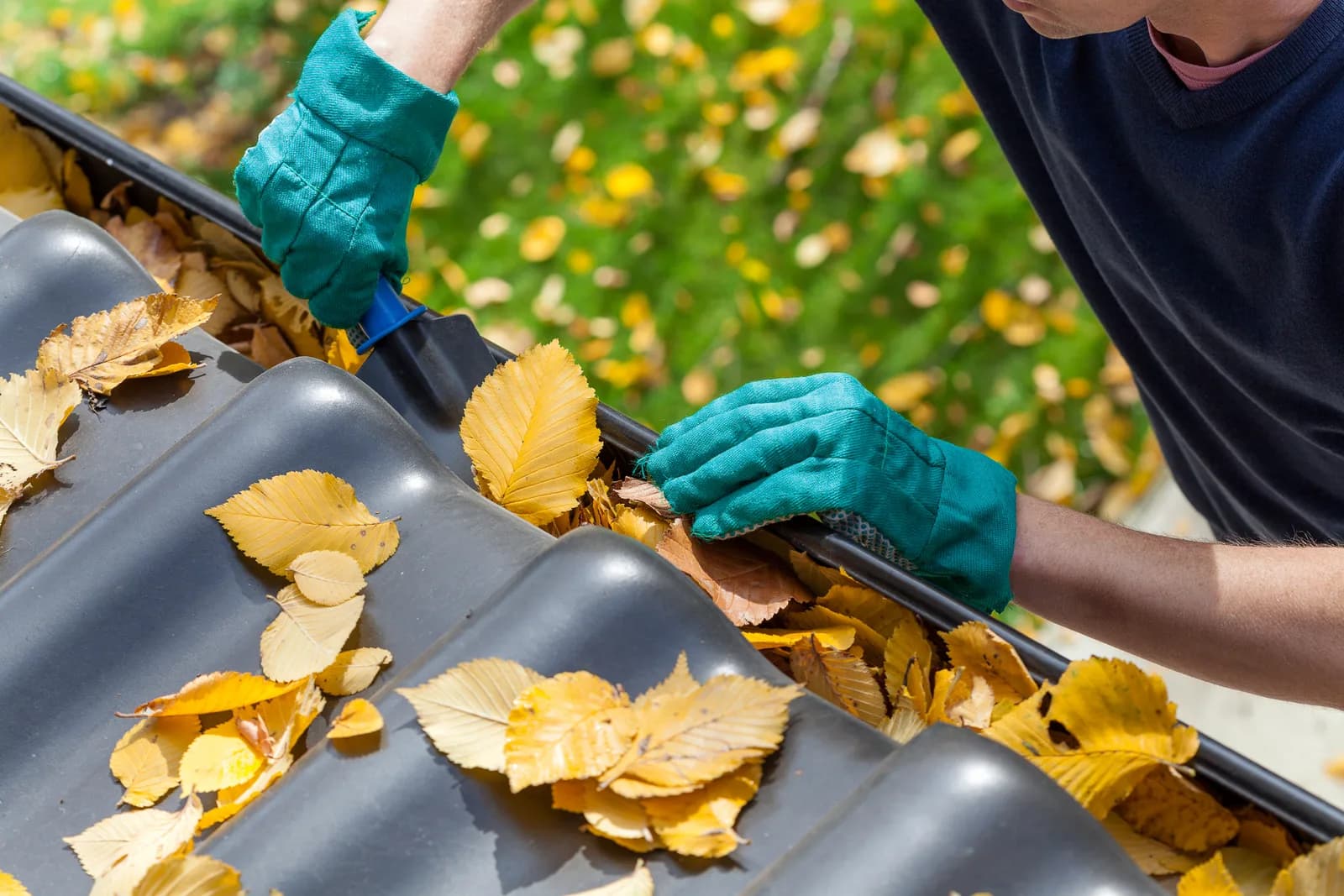
- 2. Remove Trough Sludge by Hand: Never blast packed sludge down downspouts with a pressure washer, which only creates tight underground plugs. All compacted compost and grit should be scooped out manually into disposal containers.
- 3. Hydro-Flush Every Downspout Run: Test vertical pipes by running high-pressure water down each drop outlet. Confirm that water flows freely out the bottom elbow onto splash blocks or into perimeter drains.
- 4. Check Gutter Pitch and Slope: Gutters require a gentle, consistent downward slope toward downspouts (roughly 1/4 inch of drop per 10 feet of horizontal run). Heavy windstorms or settling brackets can create flat spots where water stagnates and pools.
- 5. Inspect and Secure Loose Brackets: Ensure all mounting spikes or hidden hangers are firmly anchored into solid fascia wood. If brackets are loose or pulling away, re-secure them before winter storms add hundreds of pounds of water weight.
- 6. Verify Downspout Extensions: Ensure ground extensions direct storm discharge at least five to six feet away from home foundations, preventing crawlspace saturation.
Emergency Preparedness During Winter Storm Events
Despite best efforts, extreme winter gales can break tree branches that smash gutter troughs or dislodge downspout elbows. During severe atmospheric river events, knowing who to call for fast emergency gutter clearing ensures sudden overflows are resolved before interior ceilings or wall framing suffer moisture damage.
According to storm safety guidelines from the American Red Cross, keeping home drainage channels, gutters, and downspouts unobstructed is one of the most effective preventive measures to safeguard residential structures against localized water intrusion and flooding during major storms.
Schedule Your Fall Cleanout Before the Rushes Begin
Once the first atmospheric river arrives, service demand spikes rapidly across the East Bay. Scheduling your fall maintenance appointment in October or early November guarantees priority booking and peace of mind all winter long. Contact Bayview Gutter Cleaning San Leandro today by calling +15107563191 or filling out our free estimate request form.